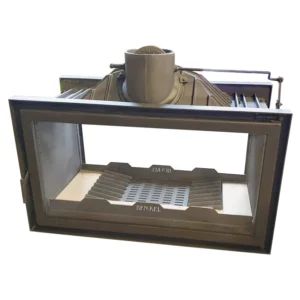
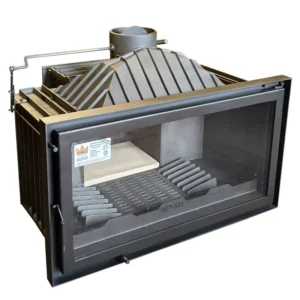
Operation and types of air-heating fireplace inserts
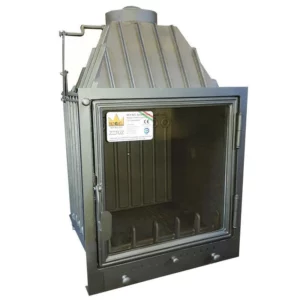
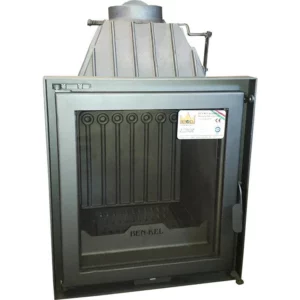
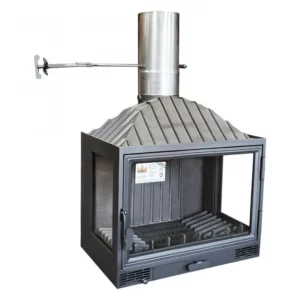
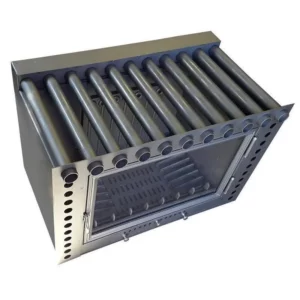
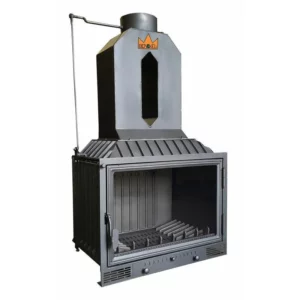
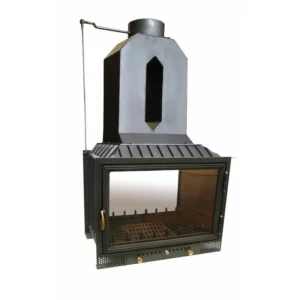
An air-heating fireplace insert is a fireplace firebox that, when properly built in, is capable of heating room air through gravity circulation. It primarily heats the room where it is installed, but with the application of appropriate ventilation technology, warm air can also be conveyed to adjacent rooms.
This is a renewable and energy-saving heating solution tailored largely to today’s lifestyle, which can be admired day after day when placed in our main living area.
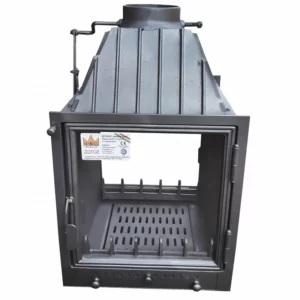
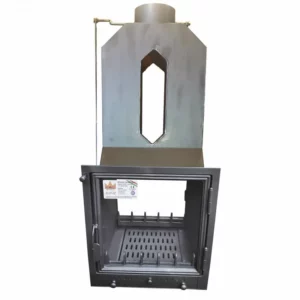
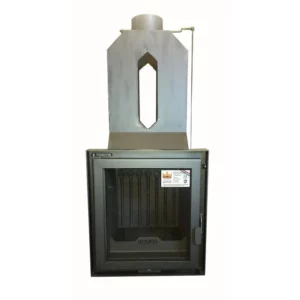
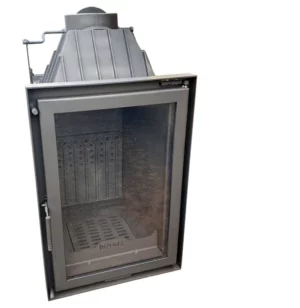
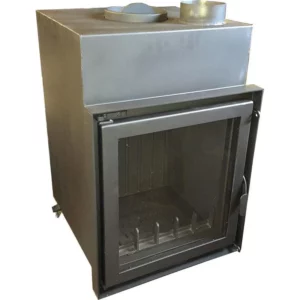
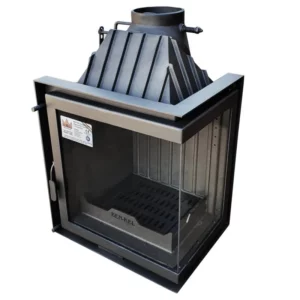
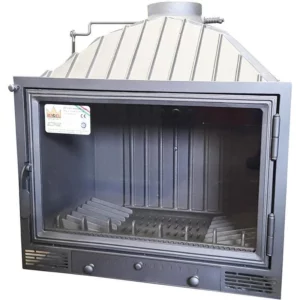
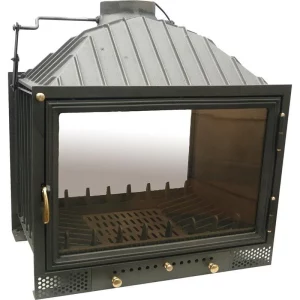
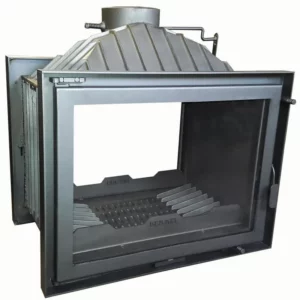
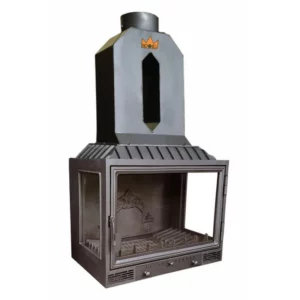
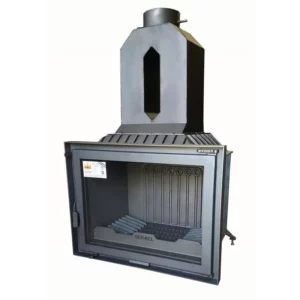
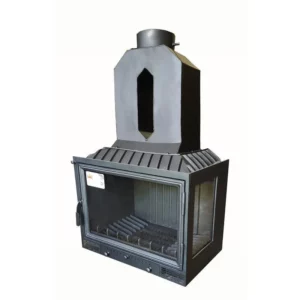
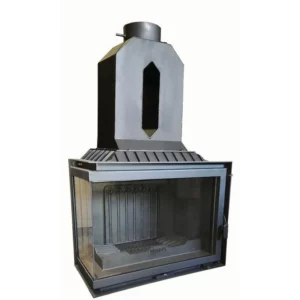
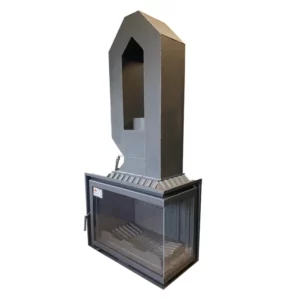
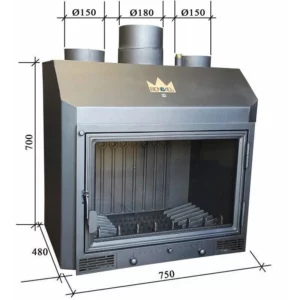
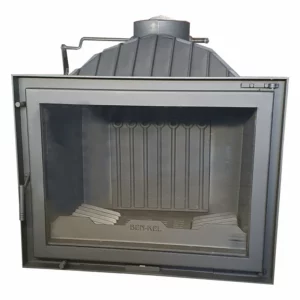
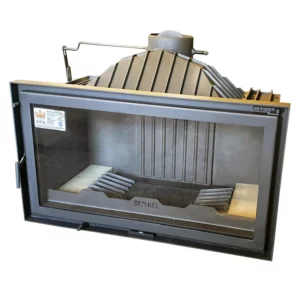
Tailored to the possibilities of the room where it is to be installed and to our needs, it can be implemented in several variations:
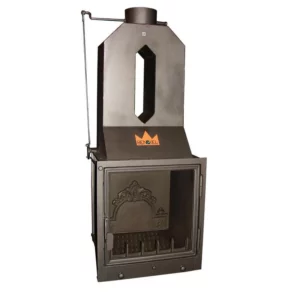
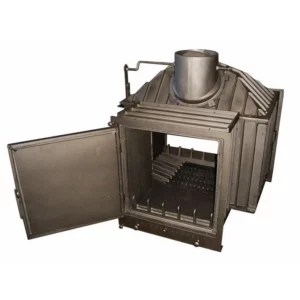
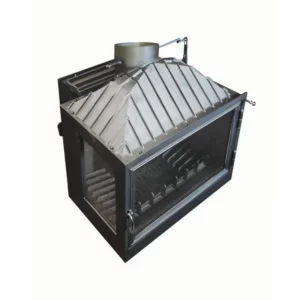
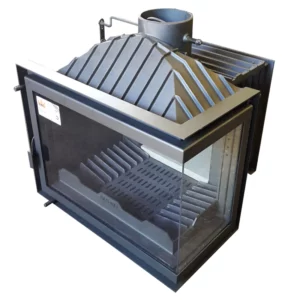
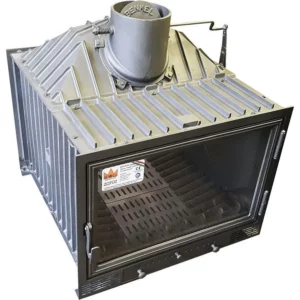
The vast majority of our air-heating fireplace inserts are made of flake graphite gray cast iron, but to meet modern demands, sheet metal fireplace inserts prioritizing design are equally available. To protect the latter and improve the firebox’s efficiency, we apply a Grenamat AS 900 highly heat-resistant lining.
We provide a 5-year warranty on our fireplace fireboxes. Being a Hungarian manufacturer, our spare parts are immediately available. Our fireplace inserts have been designed so that in the event of any issue, it can be resolved on-site without dismantling the fireplace structure.
Technical features of our air-heating fireplace inserts:
- Combustion chamber: gray cast iron
- Glass: ceramic glass heat-resistant up to 800 °C
- Sealing and bonding material: heat-resistant up to 1300 °C
- Firebox door: side-opening
- Surface treatment: dark gray heat-resistant paint
- Fuel: dry wood
- Combustion air: adjustable from the front
- Ash drawer: 6.3 liters, can be emptied during burning
- Draft control: with butterfly valve, from the front
- Secondary air: constant, led into the upper third of the fire chamber
- External air intake: optional, adjustable
- Keeping the glass clean: by providing air wash (air curtain)
- Flame deflector: optional
Air-heating fireplaces are characterized by fast warmup times compared to traditional masonry heaters, and by completely circulating the room’s air mass. Through its large heat-resistant glass, the sight of the crackling fire can be brought into our home. Models that can be fed with combustion air drawn from an external air source via an external air duct during fireplace construction can also be found in our product range.
Compared to other alternative heating solutions, the price of an air-heating fireplace is competitive, and with sensible use, the investment cost quickly pays off. Naturally, it must also be mentioned that in exchange for all these advantages, it requires more attention and care: preparing, storing, and drying firewood, carrying it into the room, and continuously adding fuel to the fire. Under current circumstances, wood heating cannot be automated, but perhaps that is for the best, as we would lose the unique atmosphere that comes with it.
Fuel and lighting a fire in an air-heating fireplace
For burning in a fireplace, the most ideal fuel is dry hardwood logs (preferably with a moisture content lower than 35%), 30–35 cm long and 7–15 cm in diameter. Remains from the previous burn must be removed from the firebox before lighting a new fire. These can easily catch fire again, so it is important to sweep them into a non-flammable container, such as a metal bucket.
Open the butterfly valve used for draft control and the air control vents, then place wood shavings, oiled ash, or newspaper on the grate, followed by a few centimeters of softwood kindling weighing about 0.5 kg. Surround the pile with firewood so that the thicker logs are on the outside and the thinner ones on the inside. If the weather outside is stormy or chimney performance is weak, pull out the ash tray that was emptied earlier by about one centimeter. Finally, ignite the paper using a match and close the fireplace insert door.
During lighting, push the tray back in completely after a maximum of 15 minutes if it was left cracked open, otherwise the efficiency of the fireplace insert will be lower and the thermal load on the firebox and chimney higher. This would result in wasted fuel and a reduction in the fireplace’s lifespan. Once the first load of wood has burned down, it is advisable to gather the embers together and place the next batch on top. From this point on, add 6–8 kg of wood at a time. This burns down in about 2 hours.
Using the draft regulator and air supply vent, adjust the intensity of combustion so that no more than 3.5–4 kg of wood burns per hour. Burning more than this also leads to waste, as any amount above this threshold does not add to the heat output and is therefore not utilized. Do not completely close the front-operated draft control butterfly valve and air control until intensive burning has finished.
Fireplace construction is the job of a qualified professional, as is the design and construction of the chimney. Circulating warm air, creating the convection casing, and selecting the correct materials all require attention and expertise. Without proper installation, not only can the performance of fireplaces be impaired, but warranty conditions may also be voided. A simple way to heat a flat or house is to warm the air of the system (our living space), for which a built-in firebox with cladding is an excellent choice.
Water-jacketed fireplaces differ in that they heat the system’s air only partially, while heating the water in the radiator or underfloor heating pipes through a water tank.
Fireplace construction can be carried out anywhere in the country by a master installer.
Request a quote online, or if you have any questions, reach out to us via one of our contact options.